Introduction
Not every relationship ends with shouting, fights, or a dramatic goodbye. Sometimes, it ends quietly. There’s no clear moment where everything breaks—just a slow shift. Conversations become shorter, effort starts to fade, and the emotional connection that once felt strong begins to feel distant. This quiet disconnection is what we call indifference.
Understanding the meaning of indifference in a relationship matters because it often slips in without being noticed. Many people think arguments are the biggest threat to love, but that’s not always true. In many cases, indifference does more damage than conflict ever could. When someone stops caring, stops reacting, and stops putting in effort, the relationship begins to lose its core.
In this article, we’ll look at what causes indifference in a relationship, break down the real meaning of indifference, and explain how cold indifference can slowly weaken even strong emotional bonds.
Indifference Meaning
At a basic level, indifference means not feeling much at all—no strong interest, no deep concern, no emotional reaction.
In a relationship, this shows up as emotional distance. A person might still be there physically, but mentally and emotionally, they feel far away.
Indifference in a relationship isn’t about needing a little space or having an off day. It’s something deeper and more lasting. It’s when emotional effort fades over time. Conversations feel empty, meaningful moments become rare, and reactions to things that once mattered start to disappear.
People often say the opposite of love is hate, but that’s not entirely true. Hate still involves emotion. Indifference, on the other hand, is the absence of it. And that absence is what makes it so damaging.
Cold Indifference Meaning
The cold indifference meaning goes a step further. It’s not just distance—it’s emotional numbness.
When someone shows cold indifference, they don’t just seem distant; they feel completely disconnected. There’s little to no emotional response, even in situations where you would expect some kind of reaction.
It can look like:
- Messages being ignored or answered without interest
- No emotional response during important conversations
- Lack of effort to spend time together
- Avoiding deeper discussions
- Showing little or no concern for the other person’s feelings
This kind of behavior can be especially painful because it creates confusion. The relationship is still there, but the emotional connection feels like it has disappeared.
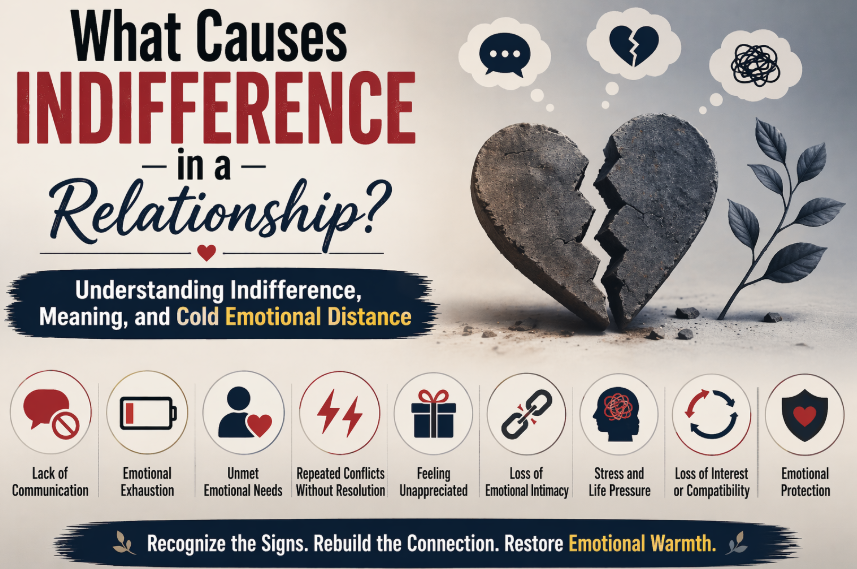
What Causes Indifference in a Relationship?
Indifference usually doesn’t happen all at once. It builds slowly over time, often as a response to repeated experiences within the relationship.
Here are some of the most common reasons behind it:
1. Emotional Exhaustion
Sometimes, a person simply gets tired—emotionally tired.
If someone feels like they are always trying, always giving, or constantly dealing with problems that never get solved, it can wear them down. At some point, expressing feelings starts to feel useless.
Instead of continuing to argue or explain, they begin to shut down. Over time, that shutdown turns into indifference.
2. Lack of Communication
When communication starts to break down, distance naturally grows.
If partners stop sharing what they feel or avoid important conversations, small issues don’t stay small for long. They build up.
Eventually, one or both people may feel like there’s no point in talking anymore. That silence slowly creates emotional detachment.
3. Unmet Emotional Needs
Everyone wants to feel valued, understood, and appreciated in a relationship.
When those needs are ignored again and again, it leads to frustration. At first, a person may try to express what they need. But if nothing changes, they may stop asking altogether.
Instead of continuing to hope, they pull back emotionally—and that’s where indifference begins.
4. Repeated Arguments Without Change
Disagreements are normal. But when the same problems keep coming back without any real solution, it becomes exhausting.
A person may reach a point where they think, “Nothing is going to change anyway.”
Instead of engaging in another argument, they choose not to react at all. Over time, that lack of reaction becomes indifference.
5. Feeling Taken for Granted
Feeling unappreciated can slowly damage emotional connections.
When efforts go unnoticed, it sends a message that those efforts don’t matter. Over time, a person may stop trying altogether.
They may begin to feel like caring isn’t worth it anymore—and that mindset often leads to indifference.
6. Loss of Emotional Intimacy
Emotional closeness is what makes a relationship feel alive.
When deep conversations, shared moments, and genuine connections start to fade, the relationship can begin to feel routine.
Without that emotional bond, it becomes easier for distance—and eventually indifference—to grow.
7. Outside Stress and Pressure
Sometimes, the issue isn’t the relationship itself.
Work stress, financial pressure, family responsibilities, or personal struggles can drain a person’s emotional energy. They may become distant simply because they feel overwhelmed.
But if this distance continues without communication, it can still create indifference over time.
8. Growing Apart
People change, and sometimes they change in different directions.
Interests shift, priorities evolve, and life goals may no longer align. If partners don’t grow together, they can slowly drift apart.
This distance can eventually turn into a lack of emotional connection.
9. Emotional Self-Protection
In some cases, indifference is a form of protection.
If someone has been hurt repeatedly, they may stop allowing themselves to feel deeply. It becomes a way to avoid more pain.
Instead of staying open and vulnerable, they shut down emotionally—and that shutdown can look like indifference.
Conclusion
Learning what causes indifference in a relationship can help you notice the signs before the connection fades too far.
The indifference meaning in a relationship isn’t just about being distant—it’s about emotional disconnection. And cold indifference shows just how painful that disconnection can feel.
Most relationships don’t end suddenly. They fade when effort slows down, communication breaks down, and emotional needs are left unmet.
But recognising these patterns early can make a difference. With awareness and effort, it’s still possible to rebuild connection and prevent indifference from taking over.