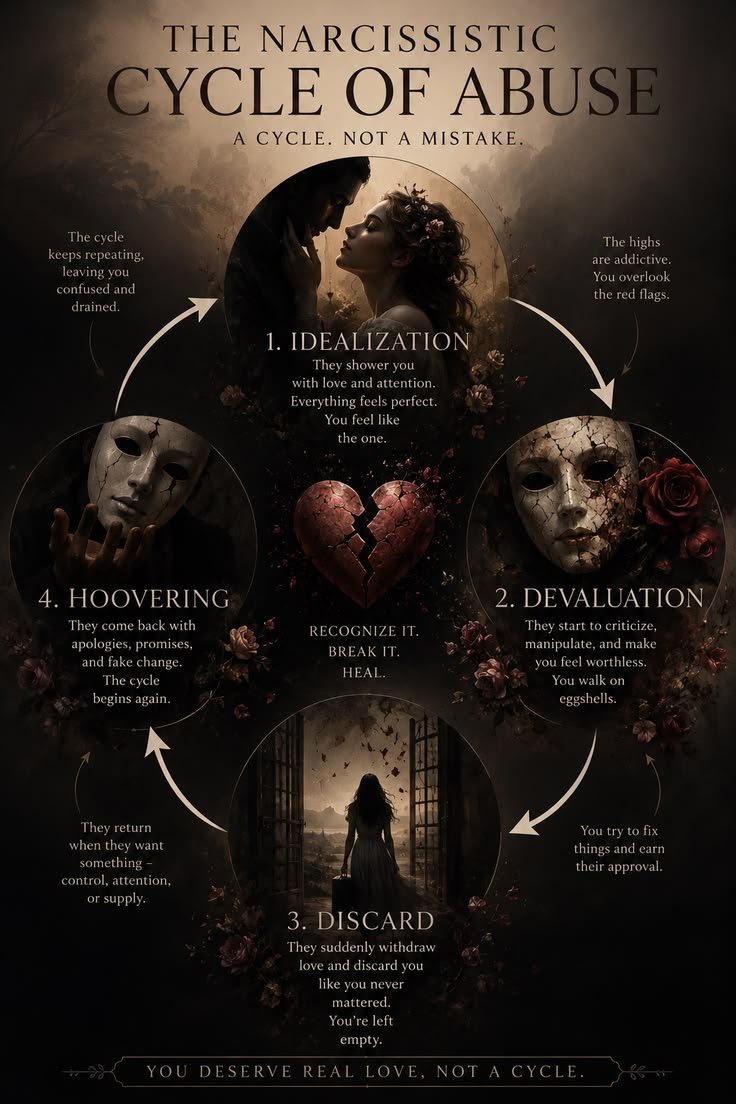
Relationships should give us trust, respect, and emotional safety. When someone controls and manipulates us repeatedly, it can be confusing and exhausting. A toxic pattern is the cycle of abuse. It’s a repeated sequence of behaviors that makes us feel trapped, anxious, and unsure.
The cycle has stages that repeat, making us feel good and then bad. This keeps us attached but unsure. Understanding this cycle helps us see relationships and make good choices. We must know the signs to protect our being and confidence.
Understanding the Narcissistic Cycle of Abuse
The narcissistic cycle of abuse is a pattern of manipulation in relationships, with control and emotional exploitation. It starts with experiences making the victim feel valued. Over time the narcissistic cycle of abuse changes and the victim feels confused and distressed. The narcissistic cycle of abuse creates emotional attachments making it hard for people to leave the narcissistic cycle of abuse.
Stage 1: Idealization
The idealization stage is when someone gets a lot of attention and praise. It can feel exciting and very close.
Some common things that happen in this stage are:
- Lots of compliments
- messages
- Big promises about the future
- emotional closeness
- Feeling like they really get you
This stage can create an emotional bond. The attention and affection can feel real. It can be too intense and happen too fast. It’s not, like a relationship. It’s a tactic to get trust and dependence.
Stage 2: Devaluation
After a relationship starts it can change. The devaluation stage brings criticism, emotional withdrawal and inconsistent behavior.
Some signs are:
- Increased criticism
- Gaslighting
- Blame-shifting
- Emotional neglect
- Silent treatment
- Isolation from support systems
This sudden change can confuse people. They try to regain the affection they had earlier.
It can lead to self-doubt and anxiety. People may question themselves, not the behavior. Research shows that psychological manipulation, during this stage affects self-esteem and emotional stability
Stage 3: Discard
The discard stage is when someone suddenly stops investing emotions. The person they once idealized may feel ignored or replaced.
- Sudden breakups
- Feeling abandoned
- Being treated with indifference
- humiliation
- Smear campaigns
- Betrayal
Many people find this stage devastating because it comes out of the blue. The change, from affection to hurt can be hard to understand. Those experiencing discard often seek explanations. May not get closure. Some people who hurt others may quickly move on showing empathy for their past partners. This can leave wounds.
Stage 4: Re-Engagement or Hoovering
The final stage is about trying to reconnect after a relationship has gone bad or ended.
This phase is called hoovering.
It includes things like:
- Getting messages
- Hearing promises to change
- Receiving apologies
- Expressions of regret
- Attempts to make you jealous
- Requests, for another chance
The goal is to pull you in. Many people struggle to resist because their emotions are still strong. When they reconnect the cycle often starts over with idealization. This pattern can make you more emotionally dependent. Make it harder to leave the relationship.
Why the Cycle Is So Difficult to Break
One reason people stay in a cycle of abuse is the contrast between good and bad times. They recall the love, attention and connection from the stages and hope it will come back. When abusers switch between being kind and cruel it creates an emotional bond.
- People focus on the times and downplay the bad.
- Manipulation, like gaslighting makes victims question their reality.
- This makes it hard to make decisions.
- Being cut off from friends, family and support makes people more vulnerable with fewer people to offer a view or encouragement.
Emotional Effects on Survivors
The impact of being in a relationship for a long time can be really bad.
Common effects include:
- Anxiety
- Depression
- Chronic stress
- Emotional exhaustion
- Low self-esteem
Many people who go through this feel. Unsure of themselves.
Recovery, from relationship dynamics involves rebuilding confidence and setting healthier boundaries. Narcissistic Abuse Rehab says that knowing what is happening and having support can really help people recover from relationship dynamics and heal.
How to Begin Healing
Recovery from abuse starts with seeing the patterns and knowing that abuse is not okay in a relationship. You can take some steps to help yourself like learning about abuse rebuilding your support system and setting limits. It is also good to get help from a professional take care of yourself and write down what happens to you. Healing takes time. It is not always easy. You will get better with time support. By being kind to yourself. Recovery from abuse is, about growth and taking care of yourself.
Final Thoughts
Understanding the narcissistic cycle of abuse can help individuals recognize patterns that may otherwise remain hidden beneath moments of affection and reconciliation. By learning to identify the stages of idealization, devaluation, discard, and re-engagement, survivors gain valuable insight into the dynamics that keep unhealthy relationships functioning.
Education is a powerful tool for recovery. Through awareness, support, and healthy boundaries, individuals can move beyond manipulation and build relationships grounded in respect, trust, and emotional safety. Resources and educational materials from Narcissistic Abuse Rehab continue to help people better understand abusive power-and-control dynamics and support their journey toward healing and personal growth.